
Nowadays, many businesses use Electronic Data Interchange (EDI) to streamline business processes like the exchange of documents. While automating helps save time and reduces errors, at times errors still occur. This often happens when there’s a gap in understanding the different kinds of EDI documents. Thus, businesses today need to have a good understanding of the different EDI document types to avoid errors and improve operational efficiency.
What are EDI Document Types
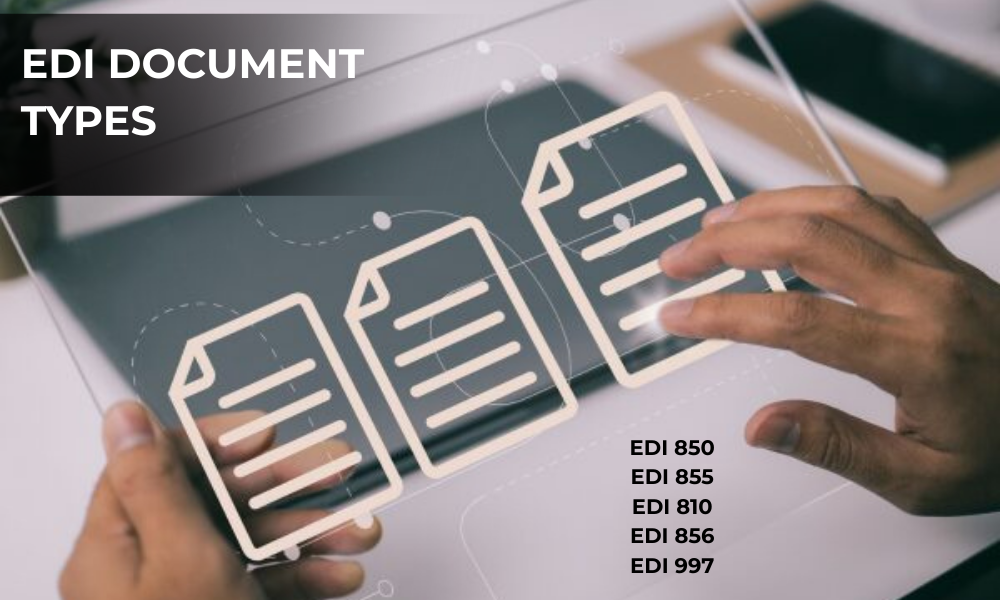
EDI document types are standardized electronic formats that businesses use for transactions. They are like templates that are used for a specific purpose by businesses. A specific document type could be used for placing an order, while another might be useful for sending an invoice acknowledgment receipt. Some common EDI document types are:
- EDI 850 – Purchase Order: This document is sent by the buyer to request goods and services. It includes details like item numbers, quantities, prices and shipping information.
- EDI 855 – Purchase Order Acknowledgment: This document is sent by the seller to the buyer after receiving an EDI 850 purchase order. It is sent to confirm, reject, or modify the purchase order.
- EDI 810 – Invoice: The seller sends this to the buyer to notify them about the amount they need to pay. It includes details like invoice number, amounts, payment terms, etc.
- EDI 856 – Advance Ship Notice (ASN): This is sent to the buyer to notify them of the shipping date, goods being shipped, the carrier they are sent through and the expected delivery date.
- EDI 997 – Functional Acknowledgment: This acts as an acknowledgment receipt that confirms the documents were received and whether the format was correct or there were formatting errors.
There are many other EDI document types that are used for different purposes in different industries.
How these Document Types reduce Errors
- Clarity and Consistency – When trading partners communicate in the same format, communication becomes easier and clearer. With a standard document, both parties know which data is mentioned in which field, such as order numbers, shipment dates, quantities, etc. This standardized format reduces the chances of errors.
- Validation and Rejection – EDI documents that have been incorrectly formatted get rejected. Along with it, the exact fields that have been incorrectly filled or are invalid are also marked. This allows you to identify the problem, understand and fix it quickly.
- Supply Chain Visibility – With Advance Ship Notice EDI (856), you get visibility of what’s being shipped in advance. This allows warehouses to prepare for sending goods and buyers to plan for receiving them. Without an ASN, you may encounter issues like inventory mismatches, overpacking, etc.
- Faster Invoice Processing – When you use EDI, data automatically enters the buyer’s system, so that there’s no need for manual data entry. This helps improve the speed of approvals, payments and also reduces errors.
- Efficient Exception Handling – In case the buyer wants to change the purchase order, EDI 860 is useful. If both parties can communicate the change with each other and have no issues with making the changes, then such exceptions can be efficiently handled with EDI. Unlike manual changes, which often have errors, EDI systems don’t make such errors.
Connect with EDI Partners today for top-notch EDI integration services. We have a deep understanding of the various EDI document types and can help improve your business operations. Choose us to get the support you need to make your business thrive.

- 10 Future of Supply Chain Predictions for 2026 - July 31, 2026
- 10 Most Common EDI Myths: What’s Fact vs. Fiction? - July 22, 2026
- 15 Must-Ask E-Invoicing RFP Questions - July 14, 2026